
Farmhouse Restoration in Tuscany: Buying in Chianti
Buying a Chianti farmhouse requires technical, planning, and landscape checks. Learn how to assess a property and plan your restoration without unwelcome surprises.
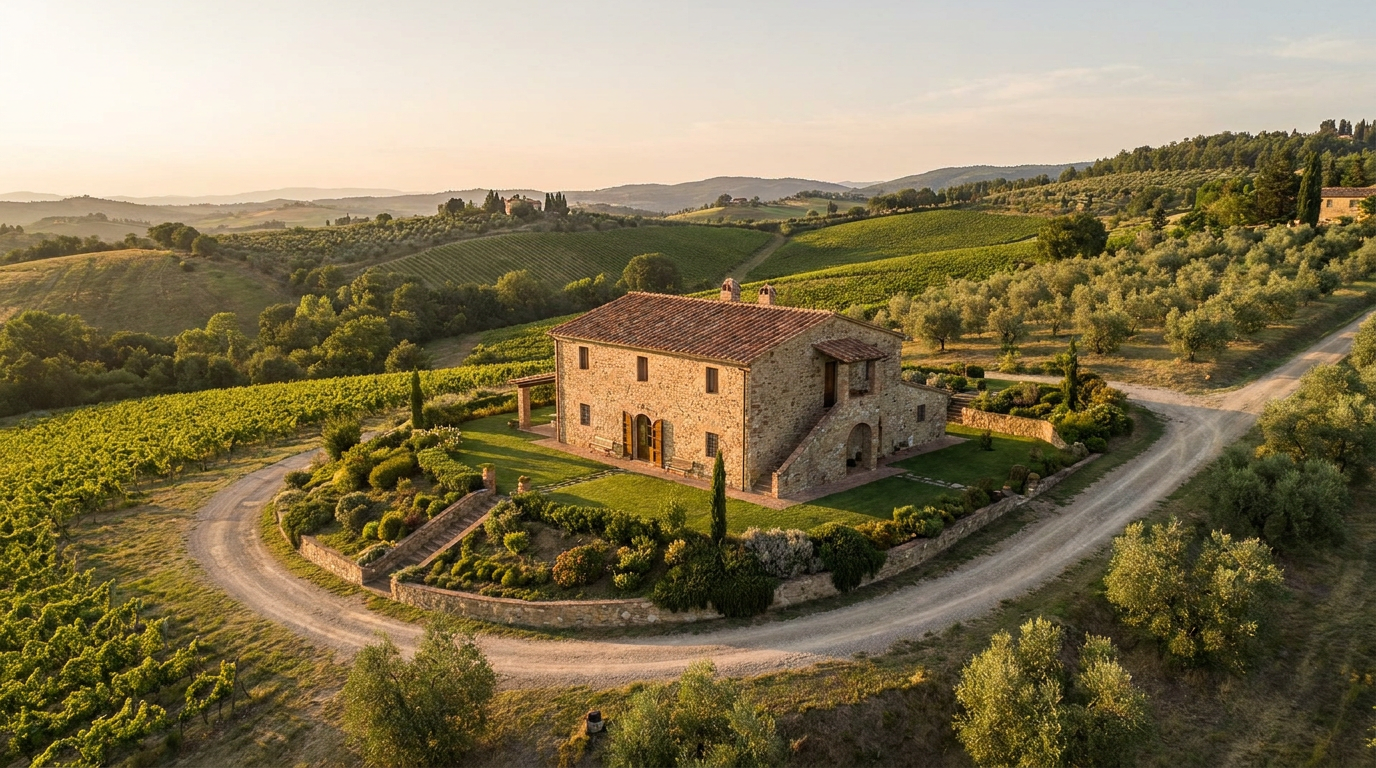
Buying a farmhouse in Chianti means becoming part of a unique landscape shaped by hills, vineyards, olive groves, and rural architecture layered over centuries. Yet behind the charm of stone walls, old beams, and sweeping views, there may be structural issues, unauthorized alterations, or restrictions that affect the project's schedule, costs, and feasibility.
Before signing a binding offer, you should evaluate not only the property's beauty but also whether it can actually be transformed as you envision. In the Chianti farmhouse market, thorough due diligence helps you determine whether the property can become the home you imagine, without discovering planning limitations, systems that need replacement, or unauthorized work when it is too late.
1. Define your project before you start looking
Every property search should begin with the result you want to achieve. Are you looking for a year-round private residence, a second home, a hospitality property, or a luxury estate with a pool and guest accommodations? Your answer will influence the location, interior layout, and checks you need to carry out.
A highly authentic farmhouse may have small windows, uneven ceiling heights, and rooms originally designed for agricultural purposes. These features are part of its value, but they can make a radical transformation more difficult. Similarly, a large rural outbuilding is not automatically eligible for conversion to residential use.
Before arranging viewings, define at least:
- the required floor area and number of bedrooms;
- your desired level of privacy;
- the maximum distance from villages, services, and airports;
- whether you need a pool, guesthouse, garage, or gym;
- seasonal or year-round use;
- how much authenticity you want to preserve;
- your willingness to undertake a complete restoration.
This list will help you distinguish an appealing property from one that is genuinely suitable for your project.
2. Buying a farmhouse in Tuscany: essential document checks
Cadastral compliance, meaning consistency with the Italian property registry records, is not sufficient proof of planning compliance. Before buying, appoint a qualified professional to reconstruct the property's legally authorized configuration by comparing building permits and approvals, municipal records, cadastral plans, and the buildings as they actually stand.
Planning and cadastral compliance
Over time, many rural buildings have been extended or altered. An enclosed canopy, a bathroom added to an outbuilding, a relocated staircase, or a pool built without the correct approval process can become a significant problem. You need to know whether any discrepancies can be legalized, which applications are required, and who will bear the related costs before the final deed is signed.
You should also verify:
- the authorized use of each building;
- the legality of extensions and accessory structures;
- consistency between the actual boundaries and official maps;
- any rights of way, easements, or third-party rights;
- ownership of the access road;
- any restrictions affecting agricultural land, woodland, and waterways;
- the status of wells, wastewater systems, and the water supply.
Landscape and historic protections
Much of Chianti is protected for its landscape value. Depending on the municipality and location, your project may need to comply with requirements covering materials, openings, roofs, outdoor areas, lighting, and vegetation. If the building has recognized historic significance or is listed in local planning records, the permitted scope of work may be further restricted.
Before buying, do not ask only how beautiful the farmhouse is. Ask which alterations can actually be approved.
You should not assume that a pool, pergola, or new driveway will be permitted. Feasibility must be assessed for the specific property with the municipality and, when required, the relevant authorities.
3. Assess the structure, moisture, and land conditions
A preliminary technical inspection can reveal far more than a standard real estate viewing. In farmhouse restoration, the most significant concerns often involve foundations, masonry, roofs, and floor structures.
Diagonal cracks, leaning walls, or areas of settlement do not always indicate serious structural failure, but they require professional assessment. The roof also deserves particular attention. Check the timber structure, roof covering, insulation, water infiltration, and the quality of any recent work.
Moisture is common in rural buildings, particularly on the ground floor. It may result from rising damp, inadequate drainage, leaks, or direct contact between the walls and the soil. Simply covering stains with new finishes will not address the underlying cause.
You should also inspect the outdoor areas. The slope of the land, stability of retaining walls, water runoff, and trees growing close to buildings may create a need for additional work. If you are considering a pool, check access, exposure, distance from the buildings, and landscape compatibility in advance.
4. Systems, comfort, and access: what photographs do not show
Many Chianti farmhouses stand in isolated locations where utilities and services are not comparable to those in an urban center. You need to confirm the capacity of the electrical connection, the source of the water supply, and the wastewater disposal system. An existing well must be checked both for its documentation and for its water capacity and quality.
Outdated systems may require complete replacement. When renovating a prestigious farmhouse, contemporary comfort must be integrated without diminishing the architecture. Air conditioning, heating, ventilation, lighting, and home automation should be designed together, avoiding invasive ductwork or poorly positioned equipment.
You should also consider:
- cell phone coverage and internet connection;
- access for construction and emergency vehicles;
- the width and maintenance of the private road;
- the availability of utility and equipment spaces;
- solar exposure and building envelope performance;
- property management during long periods of absence.
If you do not live in Tuscany full time, decide from the outset how the construction work will be managed. A single point of contact, regular photo updates, and a shared schedule reduce misunderstandings and allow you to make timely decisions from abroad.
5. Estimate the investment, schedule, and contingencies correctly
The purchase price is only part of the overall investment. You must also account for preliminary surveys, design work, applications and approvals, building work, systems, landscaping, built-in furnishings, and a contingency reserve. In historic buildings, some conditions become visible only after plaster, flooring, or suspended ceilings have been removed.
As a purely indicative reference, nonstructural rehabilitation may cost approximately €1,200 to €2,000 per square meter. A complete restoration involving structural reinforcement, new systems, and high-quality finishes may broadly run from over €2,000 to €4,000 per square meter. Highly complex projects, protected properties, difficult access, or specialized craftsmanship may exceed these ranges.
These figures do not constitute a quotation and may vary considerably according to the building's condition, the project specifications, and market conditions. They generally exclude the purchase price, taxes, professional fees, furnishings, the pool, and landscaping work. A reliable estimate requires a site inspection, measured survey, and preliminary definition of the proposed work.
The schedule will also depend on the approvals required and the project's complexity. Before signing the final deed, request a phased plan covering due diligence, design, official reviews, contractor selection or contract definition, construction, and final testing. A cautious deadline is more useful than an overly optimistic promise.
2. Identify landscape restrictions and protections
Chianti covers several municipalities in the provinces of Florence and Siena, each with planning regulations and local requirements that may differ. Many properties are located in areas subject to landscape protection. Some buildings may also be covered by specific cultural heritage protections or municipal rules governing rural architecture.
These restrictions do not necessarily prevent restoration, but they affect design solutions and approval times. Openings, roofs, solar panels, pools, fences, pergolas, outdoor areas, and new driveways may require dedicated assessments and approvals.
Materials and architectural character
The restoration of stone masonry, terracotta roof tiles, timber beams, terracotta floors, and traditional plaster must be designed with care and balance. Preservation does not mean leaving everything unchanged, just as renovation does not mean erasing every trace of the building's history.
Before buying, verify that your intended use is compatible with the building. If you want large windows, several new bathrooms, a panoramic pool, or a substantial redistribution of the interior, you should understand immediately which changes may be approved. A successful Tuscan villa renovation or high-quality rural restoration begins with a dialogue between contemporary needs, the property's original character, and local regulations.
In summary
Buying and restoring a farmhouse in Chianti requires an approach that combines architectural sensitivity with technical oversight. Before making a commitment, verify the property's compliance, landscape restrictions, structural conditions, systems, access, and the actual feasibility of your intended changes.
With over 30 years of experience restoring farmhouses, villas, and historic estates in Tuscany, Tuscany Restorations can assist with the preliminary assessment and project management. You will have a single site manager as your point of contact, with regular updates even if you live abroad.
Submit the property you are considering for a free consultation. We will help you understand its potential, critical issues, and the first steps required for restoration before you make a final decision.