Farmhouse Restoration in Tuscany: What Adds Value
Not every renovation delivers the same return. Learn which choices increase a Tuscan farmhouse’s value and which simply add cost.
In Tuscany’s high-end real estate market, price is not determined by square footage alone. Two farmhouses of the same size can have very different values, and the difference usually comes down to a limited number of factors. Understanding them will help you decide where to invest your restoration funds.
1. Preserved authenticity
Original terracotta floors, chestnut beams, vaulted ceilings, fireplaces, and exposed stone walls are exactly what international buyers seek and cannot recreate. Every historic feature that is removed represents value that cannot be recovered. This is why careful, conservation-focused restoration, although more expensive, pays off when it is time to sell.
2. Noninvasive energy efficiency
A heat pump, underfloor heating beneath terracotta tiles, roof insulation, integrated solar panels, and wood windows with double glazing all reduce the operating costs of a large home that may be used only occasionally. This is a decisive consideration if you do not live in Tuscany year-round.
3. Well-designed outdoor spaces
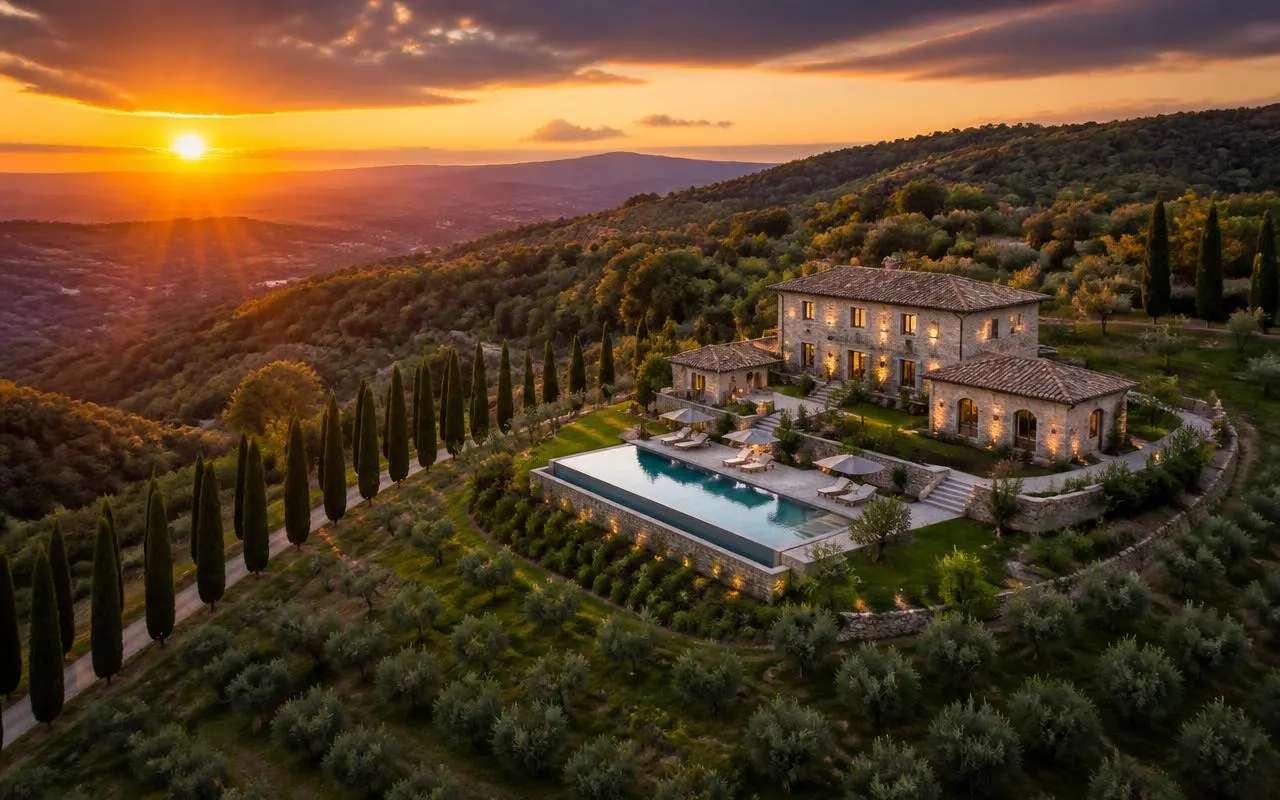
A swimming pool integrated into the slope, travertine terraces, a well-maintained olive grove, evening lighting, and convenient access all contribute to value. Outdoor areas are the first features people notice in sales photographs and on high-end rental platforms. They affect perceived value just as much as the interiors.
4. Full planning and cadastral compliance
Unresolved planning discrepancies, structures not recorded in the Italian land registry, and a missing certificate of occupancy, known in Italy as *agibilità*, are the three issues most likely to delay a sale or reduce a property’s value. Bringing the property into compliance beforehand costs less than negotiating a discount later.
5. Intended use and hospitality potential
A farmhouse designed for hospitality use, with independent units, private bathrooms for each bedroom, shared spaces, and parking, appeals to a broader market and offers measurable income potential. This decision must be made during the design phase, not after construction is complete.
6. Documented construction quality
Plans, declarations of compliance, warranties, and photographs of work that will later be concealed all matter. A complete project file reassures buyers and shortens the due diligence process.
Where spending rarely delivers a return
Highly personalized finishes, new materials that imitate historic ones, additions that are out of scale with their surroundings, and technology that cannot be maintained remotely are all expenses that rarely translate into a higher final selling price.
Practical takeaway
Value is created through a few sound decisions made at the beginning: preserve authentic features, make the house efficient and easy to manage remotely, and resolve all planning and cadastral issues. To understand which improvements could add value to your property, submit it for a free consultation.