Traditional Materials for Farmhouse Restoration in Tuscany
Original Tuscan materials add authenticity and value to a historic property. Learn when to preserve antique terracotta, pietra serena, travertine, lime, and timber.
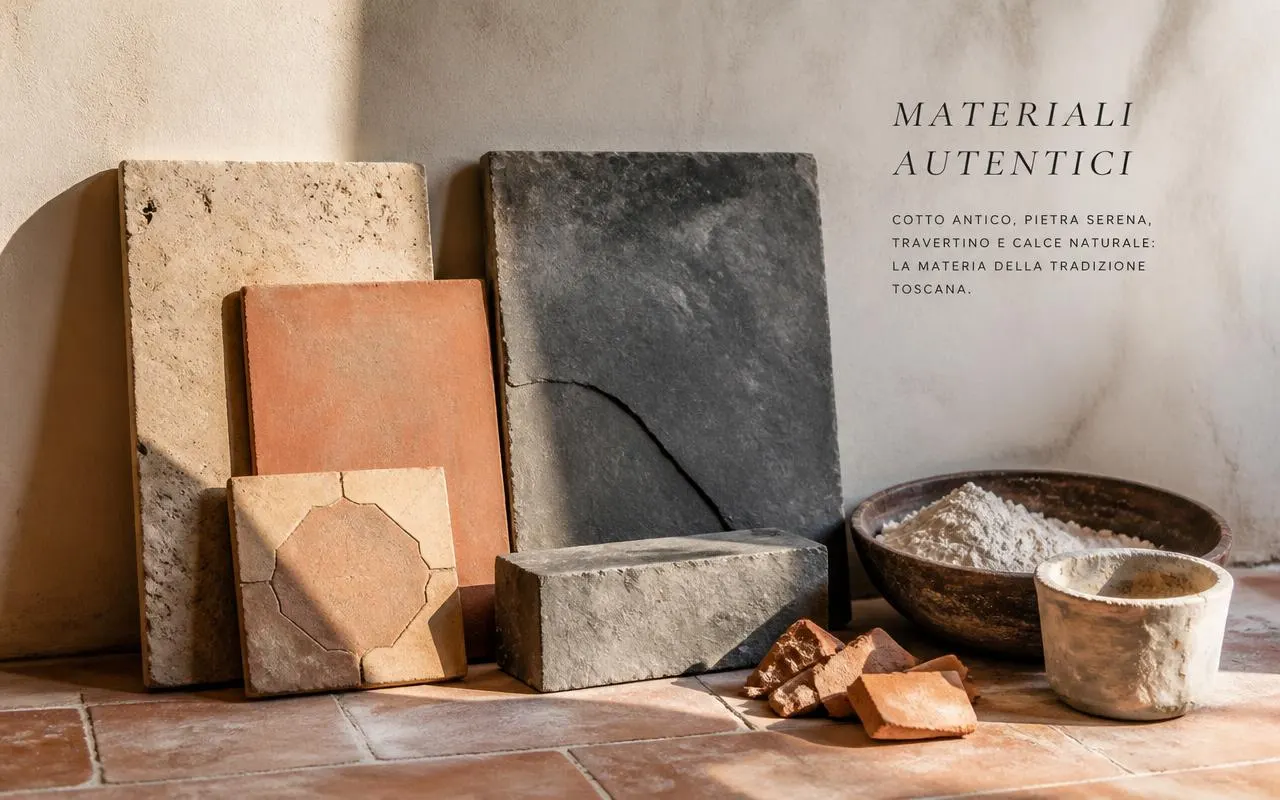
In a Tuscan farmhouse, materials are not simply finishes. They represent the structure, history, and much of the property's value. Before you consider replacing them, it is always worth determining what can be salvaged. Conservation-led restoration begins with this assessment, distinguishing a high-quality project from an ordinary renovation.
Antique terracotta: a floor that cannot be imitated
Handmade terracotta has a porosity, color, and irregularity that no industrial reproduction can replicate. On our projects, the tiles are numbered, removed, cleaned of cement mortar residue, and relaid on a compatible base, often over a radiant floor heating system.
Inevitable losses, including broken or excessively worn tiles, are replaced with reclaimed terracotta from the same geographic area rather than new material. The difference becomes evident over the years, as the entire surface develops an even patina.
Pietra serena: elegant but delicate
Lintels, brackets, fireplaces, and staircases made from pietra serena are defining features of Tuscan architecture. Pietra serena is a sandstone, so it is sensitive to moisture and salts. It should be treated with gentle mechanical cleaning and poultices, never with aggressive pressure washers that open the grain and accelerate surface deterioration.
Travertine: outdoor surfaces that last for decades
Travertine is a natural choice for terraces, pool surrounds, steps, and thresholds. It withstands frost, absorbs relatively little heat in the sun, and ages well. The finish makes a significant difference: brushed or antiqued for outdoor areas, and honed only where slip resistance is not required.
Lime, not cement
Stone masonry needs to breathe. Natural lime-based plaster and mortar help manage rising damp, while cement traps moisture and pushes it inward, causing surfaces to detach and producing efflorescence. This is the most frequent mistake we find in properties that were "already renovated" during the 1990s.
Antique timber: beams and roof structures
Reclaimed chestnut and oak must be assessed beam by beam. Each element is checked for biological damage, its remaining structural section, and the condition of its supports. Many beams considered beyond repair can actually be consolidated with wooden splices or concealed metal reinforcement, preserving their original exposed appearance.
The environmental and economic value of salvaging materials
Salvaging original materials produces less demolition waste, avoids the extraction of new resources, and preserves the authenticity valued by the high-end real estate market. A farmhouse with original terracotta floors and timber beams sells and rents at different values than one made anonymous by new materials.
In summary
Before making any decisions, you need a complete inventory of the existing materials, followed by an informed assessment of what to preserve, supplement, or replace. We carry out this evaluation during the site inspection, even before the design phase begins.
If you are considering renovating a farmhouse in Italy, submit your property for a free consultation to discuss which original materials may be worth preserving.